

Solution Spotlight

QA and Performance Reinforcement
Ensure performance standards are applied consistently by identifying execution drift early, isolating issues precisely, and correcting problems before impact spreads.
Most organizations assume that once training is completed, execution will align. In practice, performance diverges as soon as teams return to the work.
QA reviews, audits, and scorecards exist, but they function as snapshots. Issues are identified after the fact, often disconnected from the conditions that caused them.
Teams pass training, yet execution varies. The problem is not effort. It is visibility and timing.

Training completion without insight into real execution

QA findings isolated from corrective action

Issues discovered after customer or operational impact

Managers compensating for blind spots manually
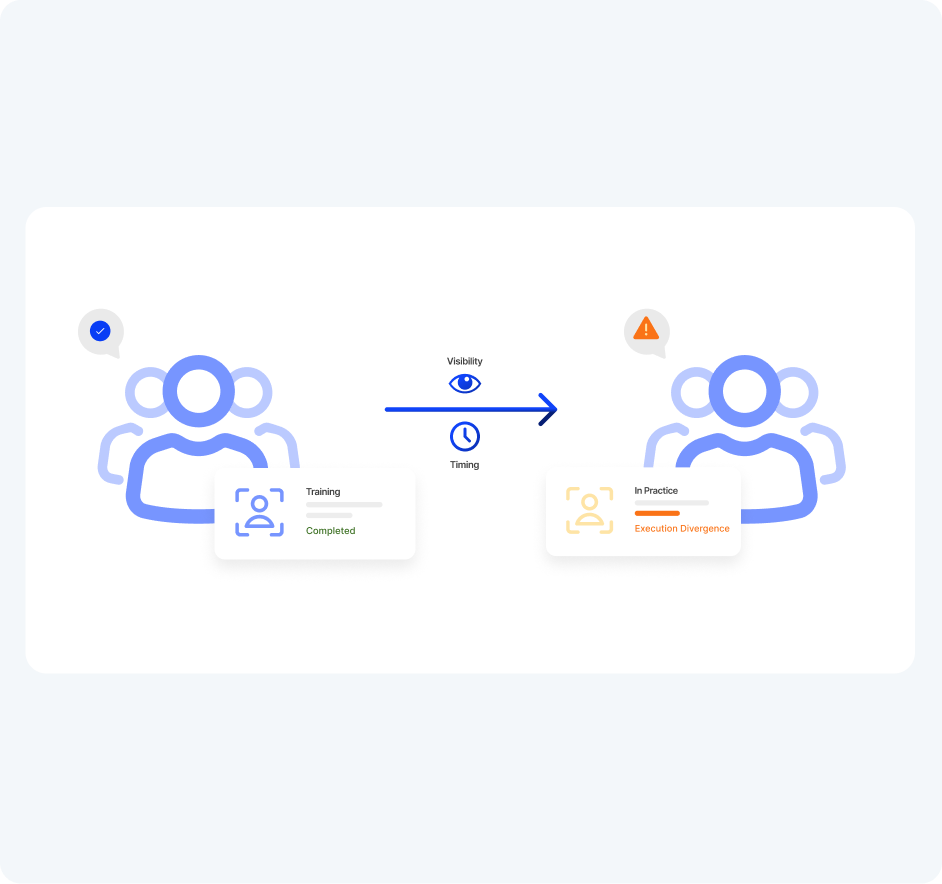
When execution is not continuously observed, inconsistency compounds.
Errors persist despite repeated training. Quality depends on individuals instead of standards. Rework increases as variation spreads. Managers spend time stabilizing performance instead of improving it.
QA loses effectiveness when problems are identified only after damage is already done.
LearnUp AI connects performance expectations, QA signals, and corrective action into a single system that surfaces execution issues while they are still small.
Instead of treating QA as a reporting function, organizations use it to maintain control over how work is actually performed.
Performance reinforcement becomes:

Preventative instead of reactive

Precise instead of broad

Sustainable at scale
Launch and update learning paths that reflect real-time operational priorities from onboarding to new regulatory standards.

Establish what correct execution looks like, capturing expectations in a form that can be consistently observed and evaluated.

Execution signals and QA inputs reveal where performance deviates, highlighting patterns rather than isolated mistakes.

Corrective guidance is applied only where deviation occurs, avoiding blanket retraining and unnecessary disruption.
As standards evolve, performance expectations remain aligned, preventing drift without repeated resets or manual intervention.
Upload *Sales_Handbook_2024.pdf*

AI Generates 5 modules + Quiz
New Hire Starts Learning Journey
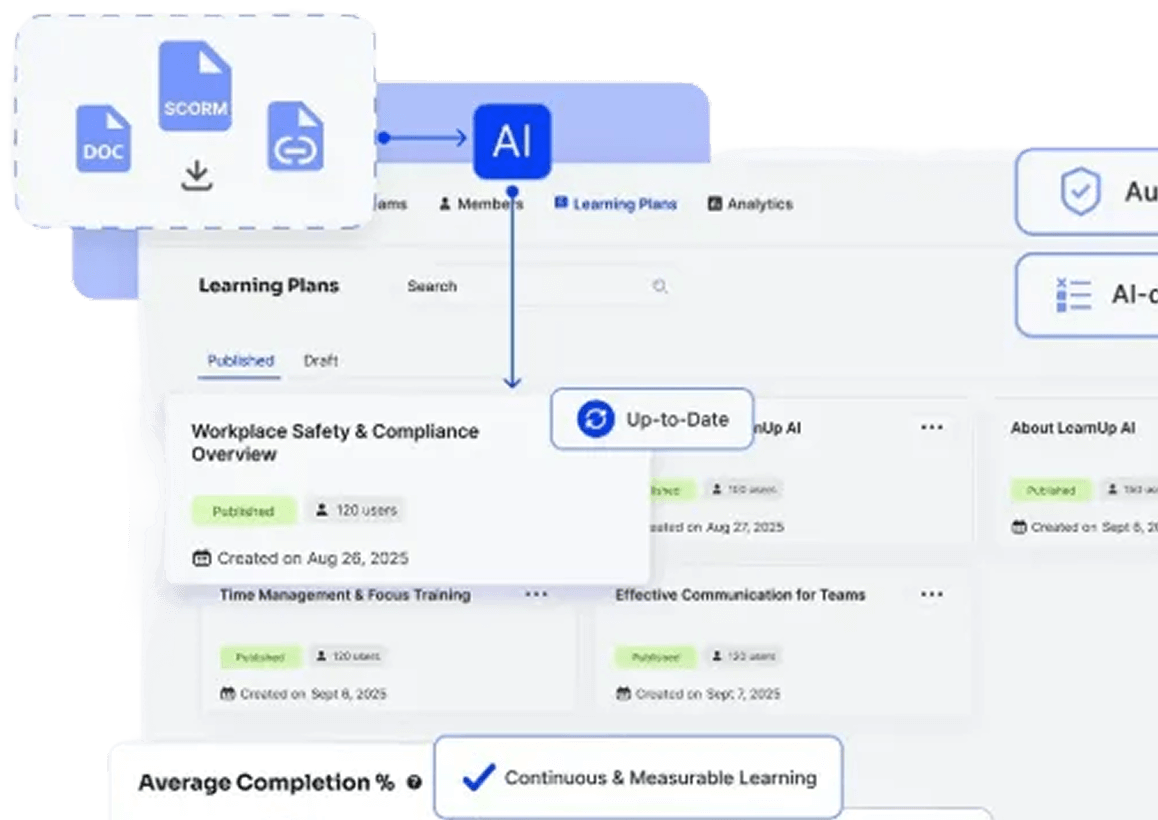


LearnUp AI continuously turns real-world performance into up-to-date courses that keep teams aligned as work evolves.
As teams execute, AI agents compare what is happening in the field against approved SOPs, quality standards, and best practices. When gaps or changes appear, LearnUp updates existing courses or generates new learning automatically, so training always reflects how work should be done now.
Instead of periodic QA reviews and outdated training libraries, organizations maintain a living course system where execution drives learning and learning drives consistent performance.
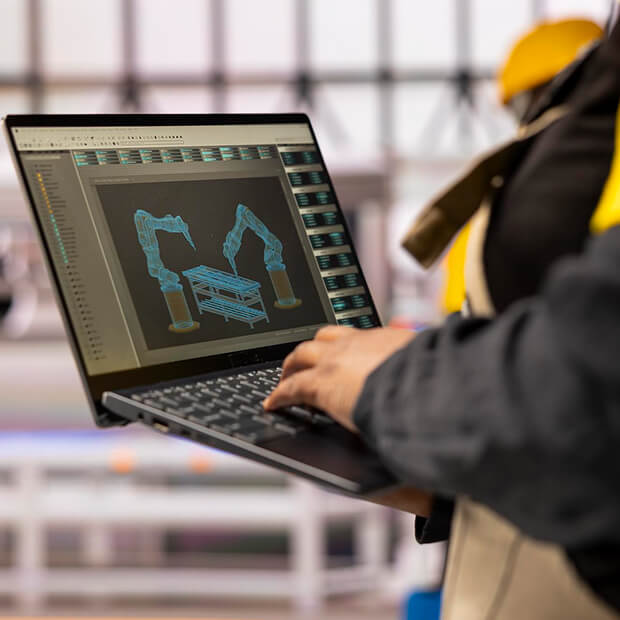
A live readiness record for every technician in your network, and the training that closes the gaps.

