


Roles expand. Teams take on new responsibilities. Tools and processes evolve. But training is often delivered once, then left behind as expectations continue to rise.
Employees are asked to perform at a higher level without clear signals about what has changed, what matters most now, or how success is currently measured.
Skill gaps do not appear overnight. They emerge gradually as learning falls out of sync with the role.
Common challenges teams face:

Training reflects earlier versions of the role

Expectations evolve without clear guidance

Managers compensate with ad hoc coaching

Performance varies widely across similar roles
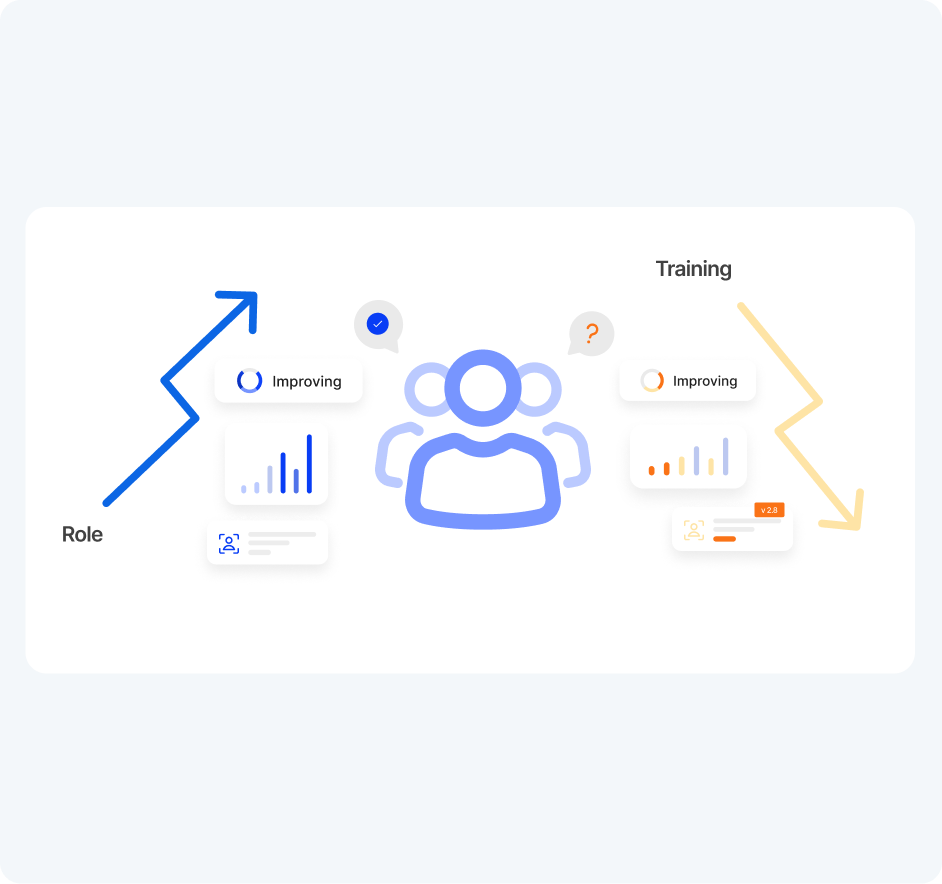
Without ongoing alignment, growth becomes uneven and difficult to sustain.
Employees plateau or struggle as responsibilities increase. Promotions happen without readiness. Managers spend time reteaching fundamentals instead of developing advanced capability. Engagement drops when growth paths feel unclear.
Upskilling breaks down when learning remains static while roles continue to evolve.
LearnUp AI helps teams translate how roles are changing into structured learning that keeps pace with real expectations. Instead of treating development as a series of programs, organizations maintain living learning paths that reflect current responsibilities, skills, and standards.
Upskilling becomes:

Continuous instead of episodic

Grounded in real work, not abstract curricula

Easier to adjust as roles shift

Define what strong performance looks like today, accounting for new tools, expanded scope, and evolving standards.

Learning is organized by role level and progression stage so growth matches where individuals are now, not where they started.

When gaps emerge, learning is directed toward specific skills or responsibilities rather than broad retraining.
As roles continue to shift, outdated guidance is replaced and new focus areas are introduced without disrupting momentum.
Upload *Sales_Handbook_2024.pdf*

AI Generates 5 modules + Quiz
New Hire Starts Learning Journey
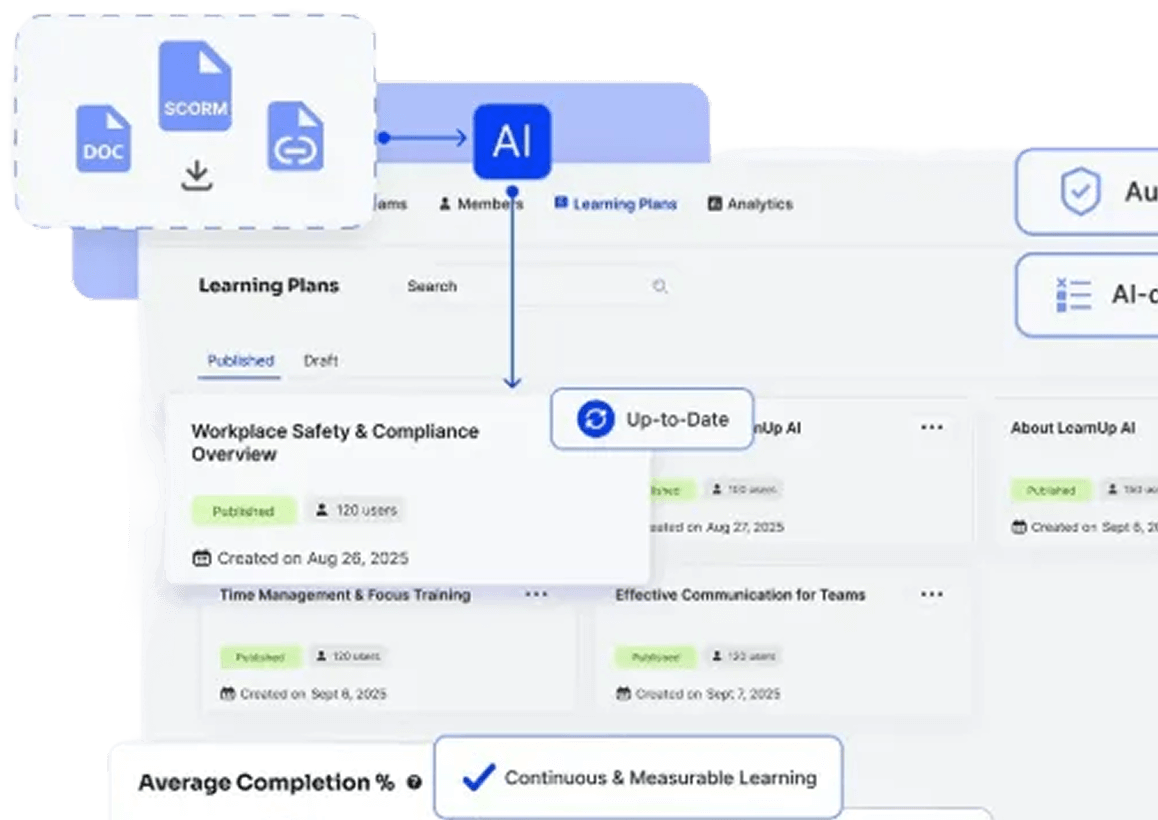


LearnUp AI preserves human expertise while making it easy to create and maintain courses that stay aligned with how roles function day to day, with AI agents keeping content in sync as work changes.
Instead of static training programs, teams use continuously updated learning paths built from real work, so courses evolve as responsibilities, tools, and expectations shift.
The result is growth that feels intentional, not reactive.
A live readiness record for every technician in your network, and the training that closes the gaps.

