

Solution Spotlight

Partner and Channel Enablement
Give partners clear direction, consistent guidance, and shared standards so growth through partners does not introduce variability, risk, or rework.
Partner ecosystems grow faster than centralized teams can manage. Each new partner brings different assumptions, interpretations, and execution habits, yet all are expected to represent your offering accurately.
Enablement is often treated as a one-time event or a static resource. Over time, partner understanding diverges, and execution depends more on interpretation than alignment.
What starts as growth quickly introduces inconsistency.
Common challenges teams face:

Partners position offerings differently in the field

Delivery approaches vary by partner or region

Program updates are unevenly adopted

Internal teams spend time correcting partner execution
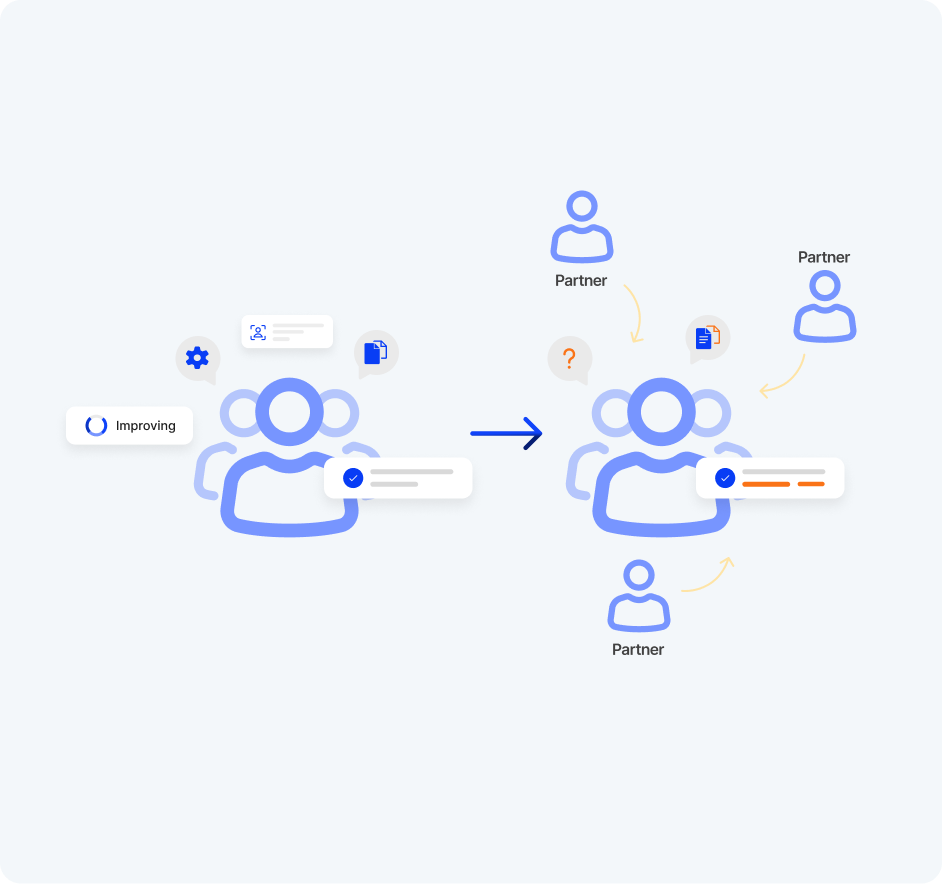
When partners operate without shared standards, the effects compound across the business.
Deals progress inconsistently or stall. Delivery quality varies across accounts. Support and success teams absorb downstream friction. Brand experience becomes unpredictable.
Partner programs do not break because partners lack effort. They break when execution is left to interpretation instead of structure.
LearnUp AI enables organizations to define, distribute, and maintain a shared operating model across their partner ecosystem.
Instead of relying on portals, documents, or periodic training, teams create structured enablement that reflects how partners are expected to sell, deliver, and support today.
Partner enablement becomes:

Standardized without being rigid

Easier to evolve as programs change

Enforced through clarity rather than oversight
Launch and update learning paths that reflect real-time operational priorities from onboarding to new regulatory standards.

Establish how partners are expected to position, deliver, and support your offering, creating a clear baseline for execution across the ecosystem.

Guidance is tailored by partner type, role, or tier so expectations match real responsibilities rather than generic instruction.

Execution patterns across partners are reviewed continuously, surfacing divergence early and restoring clarity before issues reach customers or the field.
As offerings, messaging, or delivery models evolve, enablement stays aligned without restarting programs or re-onboarding partners.
Upload *Sales_Handbook_2024.pdf*

AI Generates 5 modules + Quiz
New Hire Starts Learning Journey
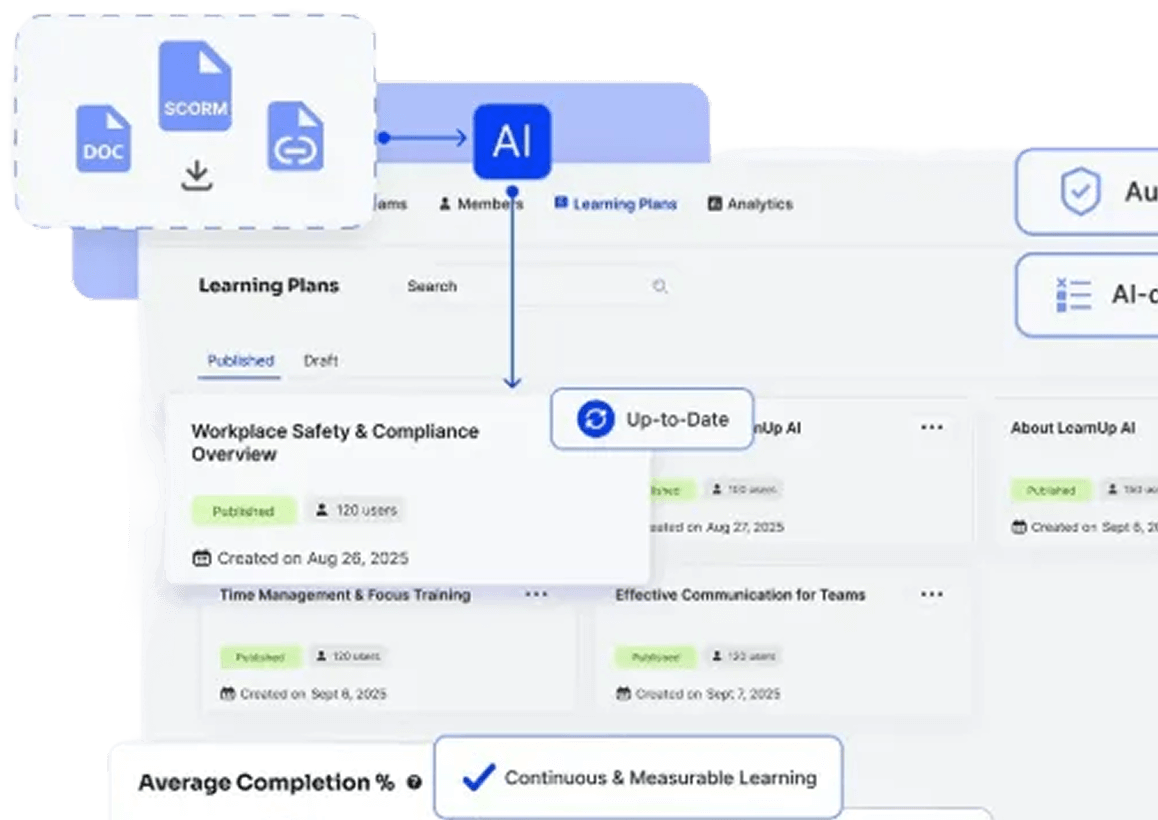


LearnUp AI helps organizations keep courses accurate and relevant as teams, partners, and regions expand.
AI Agents analyze how courses are used, where workflows change, and where expectations begin to shift, allowing training to stay aligned with real roles and execution without heavy manual effort.
Instead of static portals or disconnected programs, organizations operate a living course environment where onboarding, enablement, and certification evolve automatically as the ecosystem grows.

A live readiness record for every technician in your network, and the training that closes the gaps.

